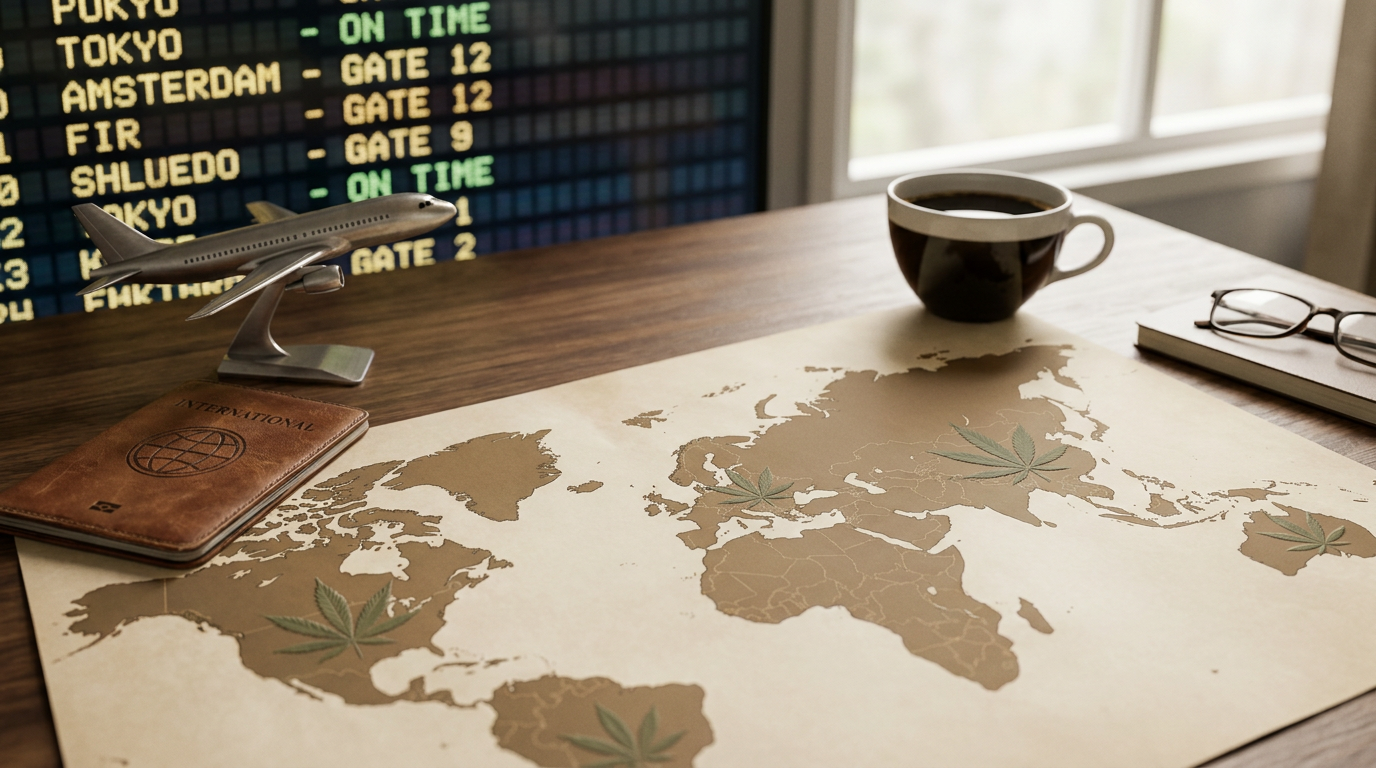
International cannabis laws vary widely, making it important for travelers to understand the regulations of their destination before departure. Some countries permit regulated recreational cannabis use, others allow medical cannabis under specific conditions, and some maintain strict prohibitions on possession and consumption.
For travelers, the main challenge is that cannabis laws do not work the same way everywhere. A product purchased legally in one country may be prohibited in another, and medical authorization issued at home may not be accepted abroad.
This guide explains important international cannabis rules, highlights differences between major destinations, and offers practical advice for planning a safe and legally compliant trip.
Understand the Difference Between Legalization and Decriminalization
Before traveling, it is important to understand the legal terminology used in cannabis regulations.
Legalization means that certain cannabis activities are permitted under a defined legal framework. This may include regulated purchasing, adult possession, or home cultivation, subject to restrictions.
Decriminalization means that certain offenses, often involving small quantities for personal use, may no longer be treated as criminal offenses in the same way. However, cannabis may remain illegal, and administrative penalties can still apply.
Medical cannabis refers to cannabis products permitted for specific healthcare purposes. Access may require a prescription, medical authorization, or an approved treatment pathway.
These distinctions matter because permission to possess cannabis does not necessarily mean that commercial sales, public consumption, or international transportation are legal.
Check Cannabis Laws Before Choosing Your Destination
Researching local legislation should be one of the first steps when planning an international trip. Cannabis regulations can differ between countries and even between states, provinces, or cities.
Canada
Canada permits regulated recreational cannabis use for adults under federal law. However, provinces and territories establish additional rules concerning minimum age, retail access, and consumption locations.
Visitors should remember that cannabis cannot be taken across Canada’s international borders without the required legal authorization. This restriction applies to recreational and medical cannabis, including many products containing THC or CBD.
United States
Cannabis laws in the United States differ between federal and state levels. Some states permit regulated recreational use, while others allow medical cannabis or maintain broader restrictions.
Even in states where recreational cannabis is legal, federal restrictions remain relevant. Visitors should check local rules and avoid transporting cannabis across state or international borders.
Germany
Germany permits limited adult cannabis possession and home cultivation under specific conditions. Non-commercial cultivation associations are also permitted within a regulated framework.
However, the country does not have unrestricted commercial recreational cannabis sales. Visitors should confirm current eligibility requirements before assuming they can access cannabis through local associations.
Netherlands
The Netherlands is known for its coffee shops, where small-scale cannabis sales are tolerated under specific conditions. Nevertheless, this system does not mean cannabis production, supply, and possession are unrestricted.
Municipal rules can also affect coffee shop access and operations. Travelers should research the regulations of the specific city they intend to visit.
Thailand
Thailand’s cannabis rules have changed considerably in recent years. Medical access and other cannabis-related activities are subject to regulations that have evolved since 2022.
Visitors should consult current Thai government guidance before making cannabis-related plans. The presence of cannabis businesses does not automatically mean recreational use is lawful.
Never Carry Cannabis Across International Borders
One of the most important rules for international travelers is to understand that cannabis legalization does not automatically permit cross-border transportation.
Cannabis, oils, edibles, and products containing THC or CBD may be subject to customs restrictions. These restrictions can apply even when the products were purchased legally and both countries permit some form of cannabis use.
For example, Canada prohibits international cannabis transportation without the required authorization, regardless of whether the traveler is entering or leaving the country.
Travelers should never assume that a legal purchase receipt, medical prescription, or product label provides permission to transport cannabis internationally.
Always check the laws of the destination and any transit countries before departure.
Understand Medical Cannabis Travel Requirements
People who use cannabis for medical purposes may face additional requirements when traveling internationally.
A prescription issued in one country may not be recognized in another. Some destinations permit only specific cannabis-based medicines, while others require advance permits or prohibit certain products entirely.
Before traveling with prescribed medication:
- Confirm whether the medication is permitted at your destination.
- Check whether an import permit or additional medical documentation is required.
- Keep medication in its original, correctly labeled packaging.
- Carry appropriate prescription documents when permitted and required.
- Check the rules of every country where you will have a layover.
Do not assume that a medical prescription automatically allows cannabis to be carried across an international border.
Learn Where Consumption Is Permitted
Even in destinations where recreational cannabis is legal, consumption may be restricted to specific locations.
Public parks, streets, beaches, workplaces, public transportation facilities, and other shared spaces may have restrictions. Hotels and rental properties can also prohibit smoking or cannabis consumption.
Before making plans, review local rules and accommodation policies. Never assume that a private balcony or hotel room automatically permits cannabis use.
Respecting these restrictions helps prevent fines, accommodation disputes, and other avoidable problems.
Avoid Driving Under the Influence
Cannabis can affect concentration, coordination, reaction time, and judgment. Driving while impaired can put the traveler and others at risk and may result in serious legal consequences.
If you are visiting a destination where cannabis use is permitted, plan transportation in advance. Public transportation, licensed taxis, or rideshare services may be suitable alternatives where available.
Do not drive or operate machinery while impaired, and check local laws regarding drug-impaired driving before traveling.
Be Careful With Products and Unlicensed Sellers
Cannabis products can differ in composition, strength, labeling, and quality. Products available in one country may not meet the same standards in another.
Avoid purchasing products from unverified sellers, and do not assume that a product marketed as natural, medical, or wellness-related is legal.
CBD products also require careful attention because some jurisdictions regulate them differently depending on their ingredients and THC content.
If you have health concerns or take prescription medication, consult a qualified healthcare professional before using unfamiliar cannabis products.
Respect Local Laws and Cultural Expectations
Cannabis may be treated differently depending on local history, social attitudes, and legal traditions. Even where some forms of cannabis use are permitted, public consumption may be socially unacceptable or restricted by local rules.
Travelers should respect residents, follow posted signs, and avoid consuming cannabis in prohibited areas.
In countries with strict drug-control laws, possession of even a small quantity may have serious consequences. Do not assume that being a tourist provides an exemption from local legislation.
Create a Responsible Travel Checklist
Before departure, review the following points:
- Research the latest cannabis laws in your destination.
- Confirm whether the rules apply to international visitors.
- Check border restrictions and transit-country requirements.
- Verify medical documentation and import rules if applicable.
- Review hotel and rental accommodation policies.
- Arrange safe transportation.
- Keep passports, travel documents, and medication secure.
- Avoid carrying packages or luggage for people whose contents you cannot verify.
A short preparation checklist can help prevent problems that may otherwise disrupt an entire trip.
Conclusion
International Cannabis Laws Around the World are complex because countries regulate recreational use, medical access, possession, purchasing, and transportation differently. Canada permits regulated adult use, Germany allows limited adult possession under specific conditions, and the Netherlands tolerates certain coffee shop sales. Other destinations maintain strict restrictions or regulate cannabis primarily for medical purposes.
For travelers, the most important rule is to research the exact laws of every destination before departure. Never assume that a legal purchase permits international transportation, that a medical prescription is universally accepted, or that consumption is allowed in public spaces.
By checking official government guidance, respecting local regulations, and planning transportation and accommodation carefully, travelers can make informed decisions and reduce the risk of legal complications abroad.